Funnel & Website AI – Enhanced Page Generation & Clone
A New Floor for Funnel AI
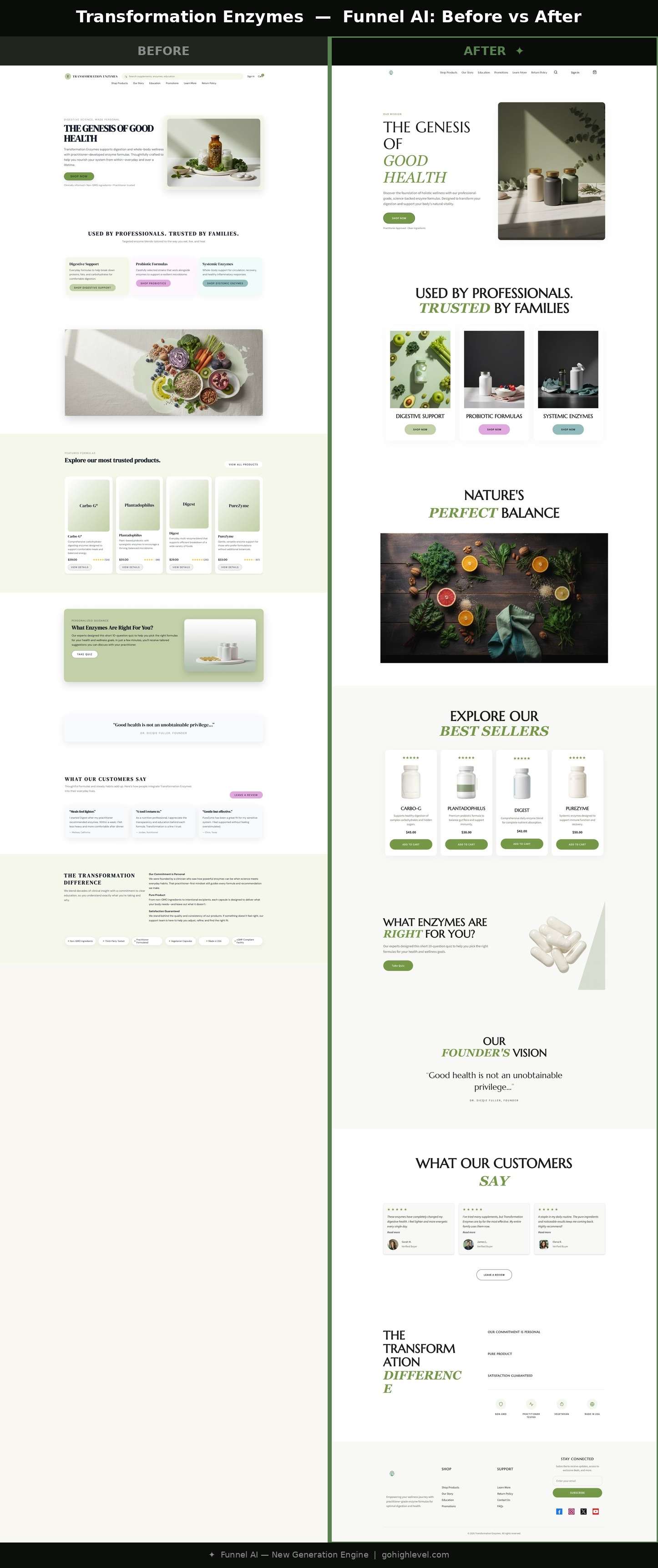
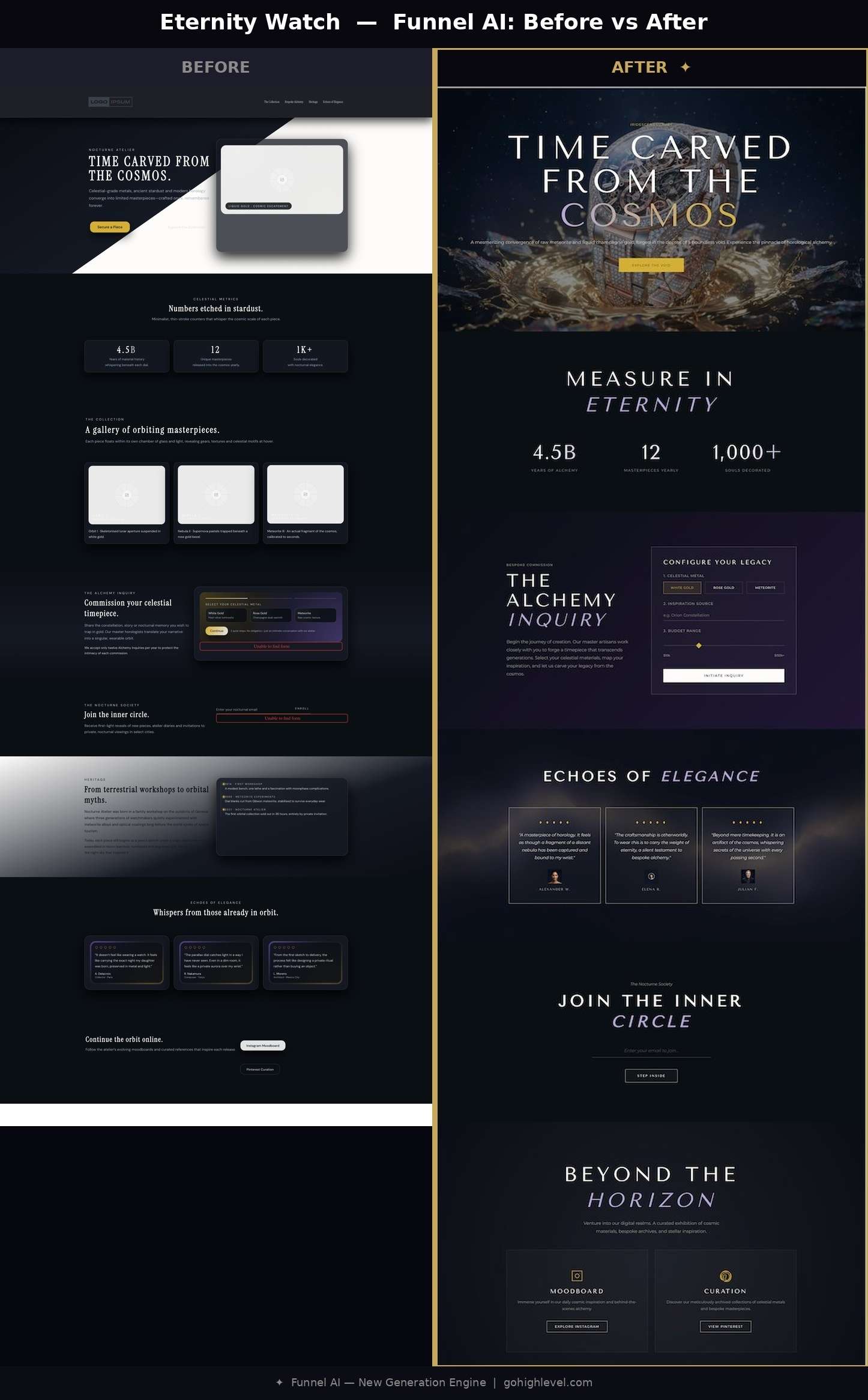
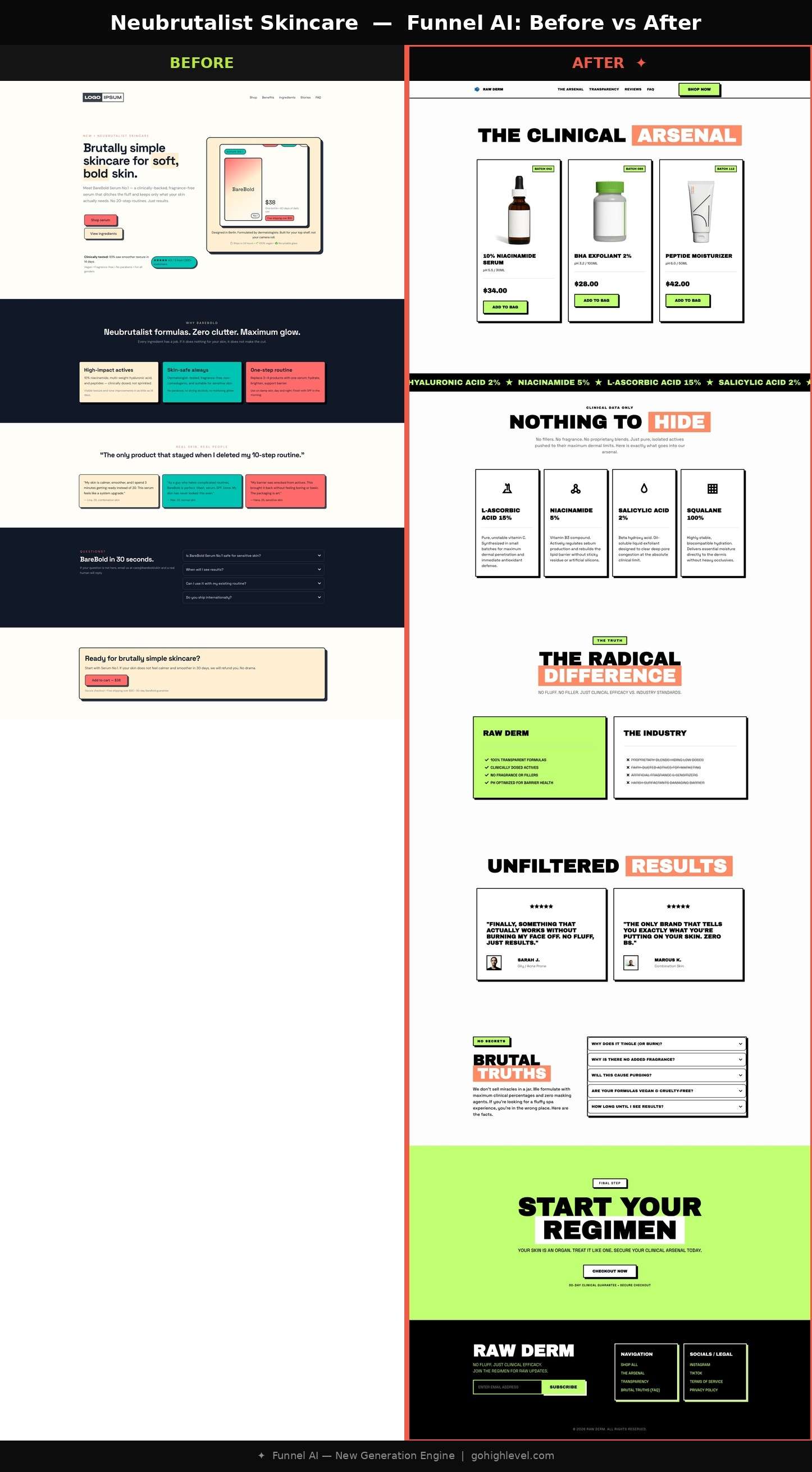
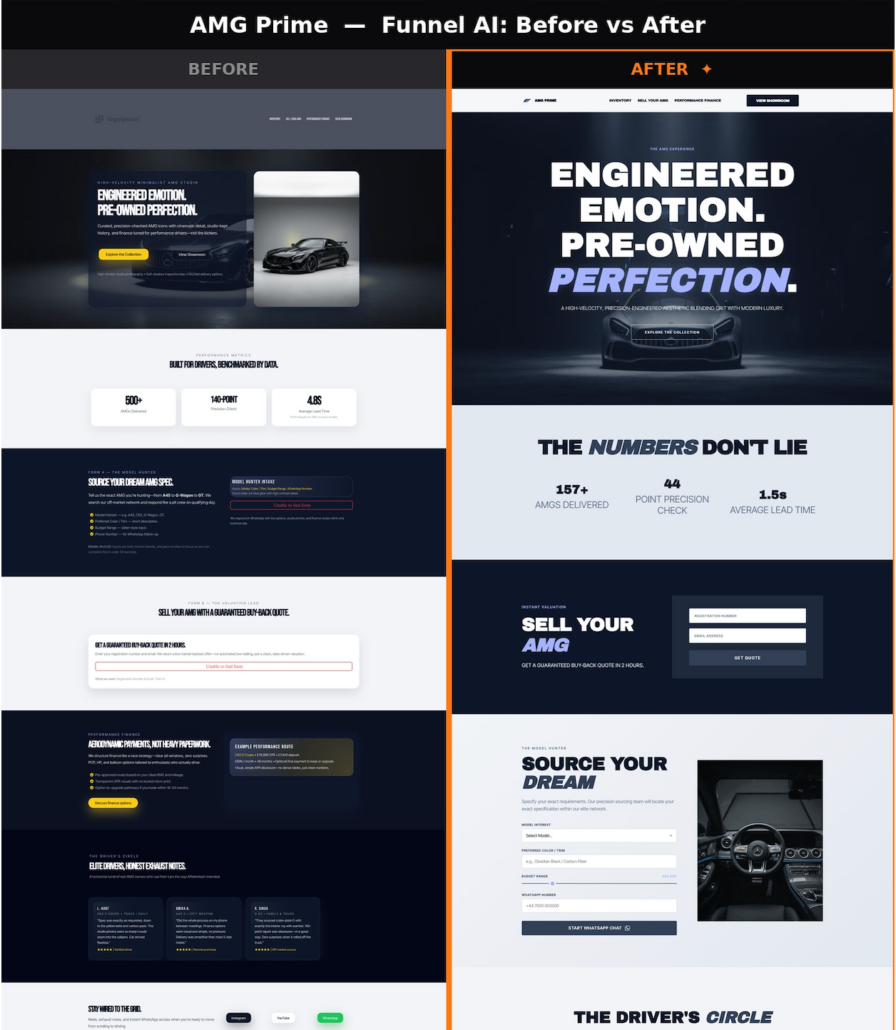
Almost every aspect of the page-generation engine—how it thinks, plans, designs, writes, illustrates, and assembles a funnel—has been rebuilt and enhanced.
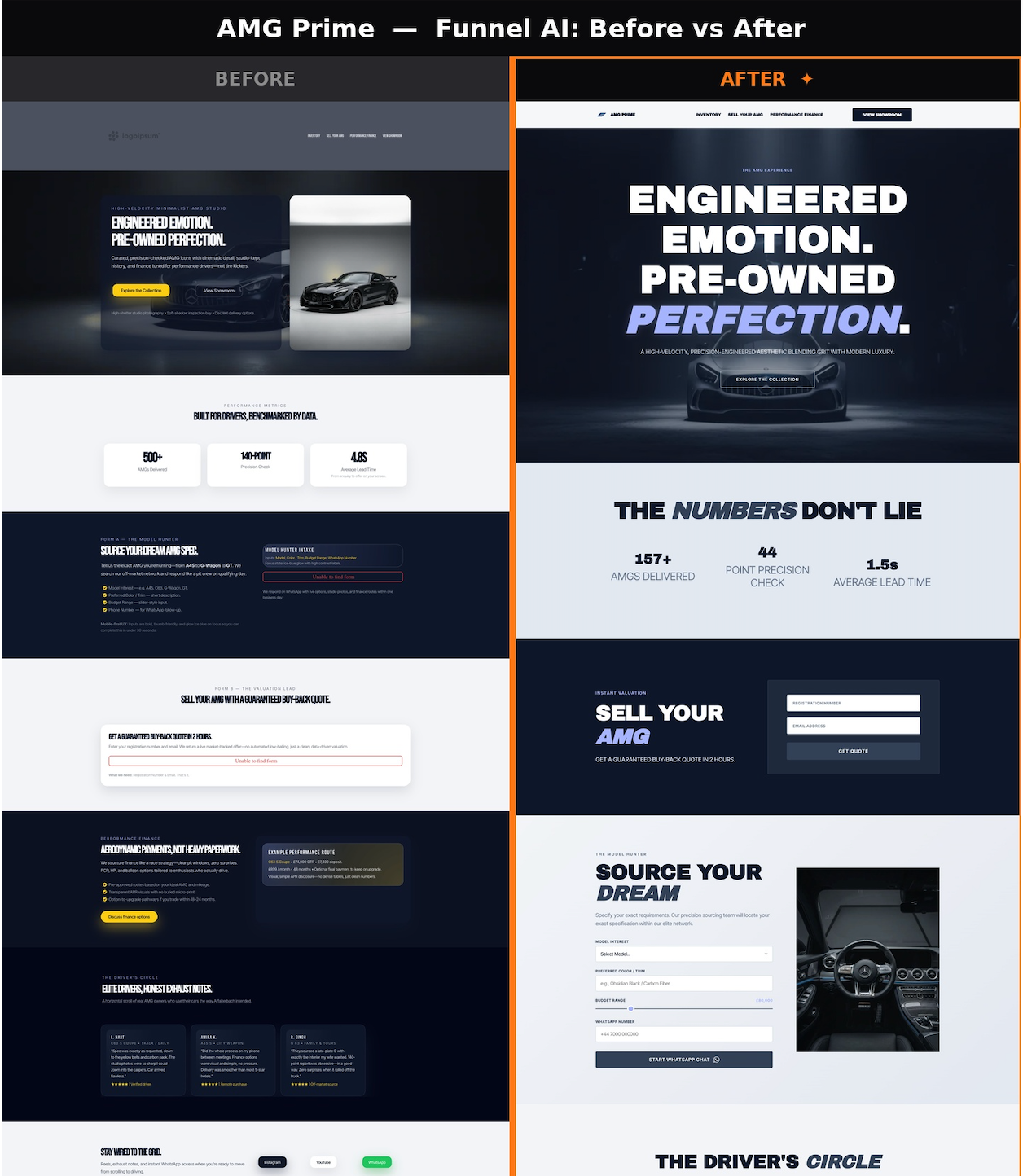
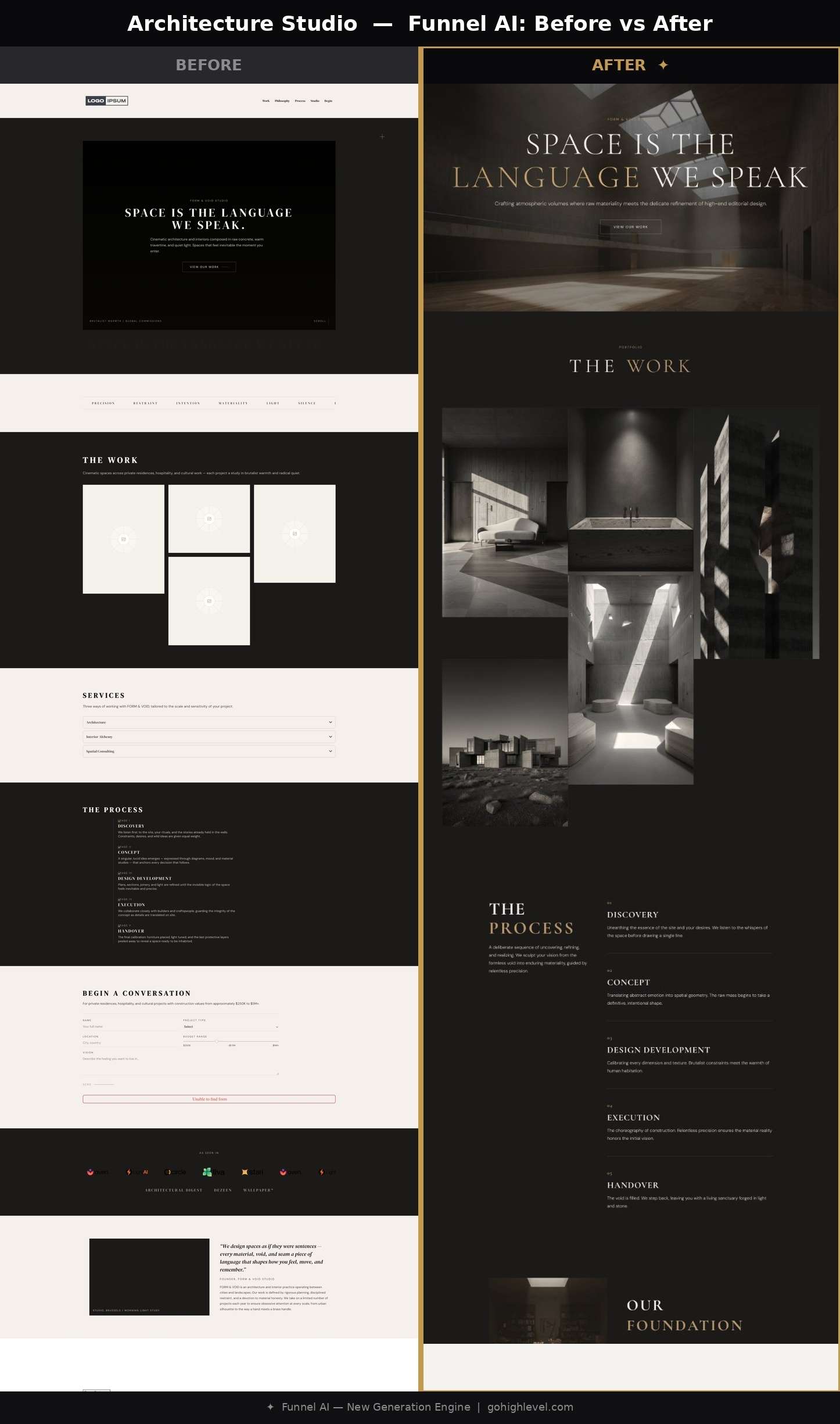
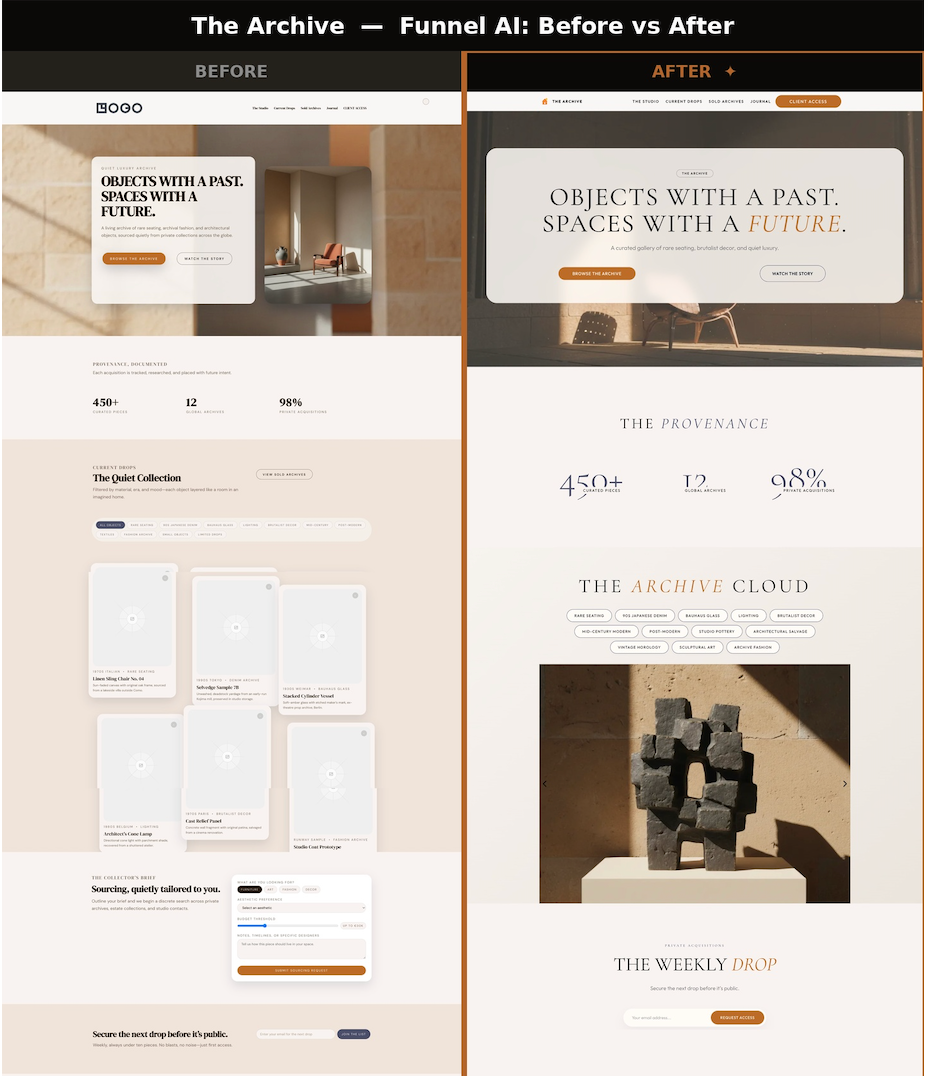
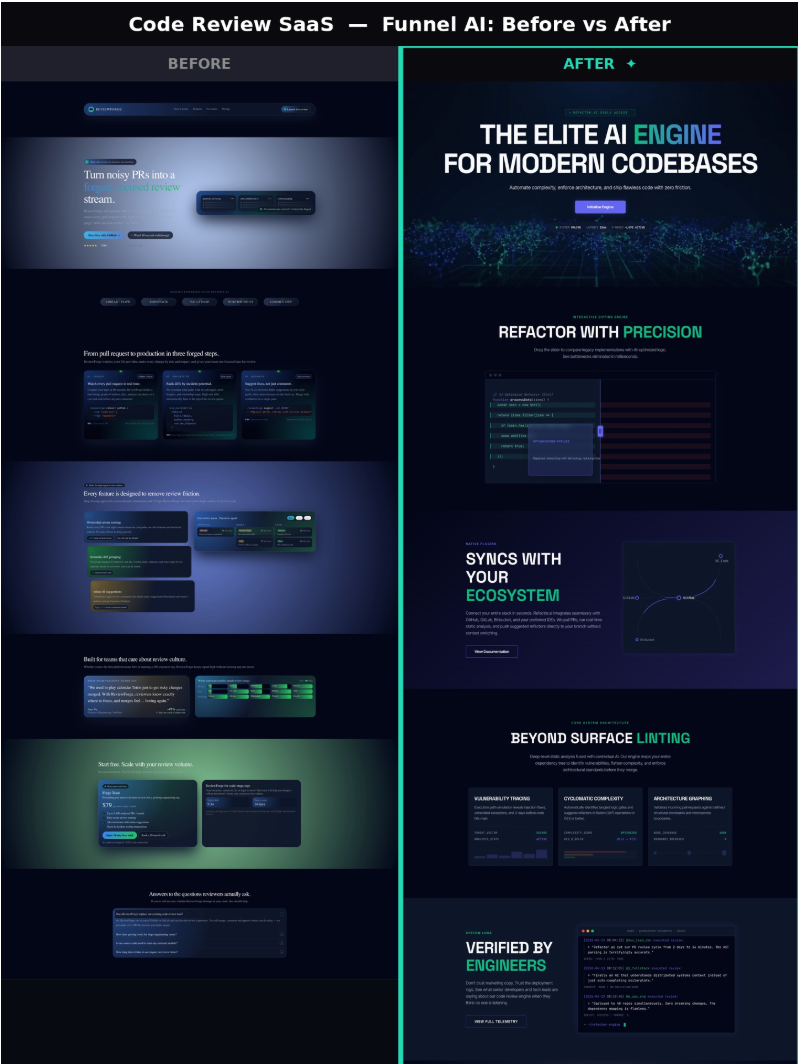
The focus of this release is singular: the quality of first-generation output. The pages generated by Funnel AI after this update are now more designed, cohesive, aligned with brand identity, and thoughtfully crafted than ever before. This version significantly advances the art of AI-generated funnels.
Funnel AI has always provided a powerful means to transform ideas into live pages. With this release, we have raised the bar on a critical question: “Is the page I just generated actually good?”
You’ll notice the improvements immediately:
• Layouts feel intentional and composed.
• Imagery is tailored to the section, the brand, and the flow of the page.
• Sections seamlessly connect, forming a unified page rather than a mere stack of components.
• Copy reads as though it were crafted by a professional writer.
• Cloned funnels accurately reflect the customisations you request.
A New Generation Pipeline
This structured, multi-stage architecture—from thinking to design, page planning, section planning, and parallel section generation—ensures each stage has its defined role, contract, and guidelines. Strategy and design intent now permeate through to the section and image prompts, providing every part of the page with a shared sense of direction.
Design Intelligence Built into the Model
Funnel AI now plans a page the way a designer would. It selects background systems (integrated, split, or cutout), chooses accent treatments, balances visual rhythm across sections, and decides when to incorporate cards or imagery, as well as when to embrace whitespace. A new style normaliser adds an extra layer of refinement: background consistency, button uniformity, FAQ structure, text-on-image contrast, and visual balance between sections—all of which means what reaches the builder is already polished.
The AI now features a library of section-specific skills—focused, self-contained capability packs that activate as needed. Dedicated guides exist for Hero, Nav, CTA, FAQ, Features, Footer, Pricing, Stats, Testimonials, How It Works, Announcement Bar, along with a generic fallback. Each bundle includes the rules, visual patterns, and image specifications specific to that section, ensuring the model applies the right craft rather than a uniform approach.
Design Intelligence as Composable Skills
Beyond section types, design knowledge is now organised as skills that the model acquires at the appropriate phase—background systems, visual rhythm, accent treatments, mobile behaviour, accessibility, image composition patterns, and more. Each strategy is small, focused, and independently improvable. As we add and refine skills, every funnel benefits automatically.
Imagery That Belongs to the Page
The image pipeline has been completely overhauled. A new image-spec node connects every image to the section’s intended purpose. A unified image tool operates across GPT and Gemini backends, incorporating rate-limit fallbacks, improved GCS reliability, and support for split, cutout, collage, and overlapping compositions. Now, images truly feel like a part of the page’s design language.
Cloning now integrates your customisation requests through vision analysis and section generation, supported by its own dedicated schema, prompts, and normalisation. Cloning with changes is a primary flow: request adjustments, and they will be reflected in the result.
Streaming and Observability
Streaming progress aligns with the new parallel section work, providing meaningful updates for each section’s tasks. Centralised event emission, Langfuse tracing throughout the graph, and consolidated LLM configuration give us deeper visibility into every generation, forming a much stronger foundation for ongoing iterations.
Prompt Architecture (Code Maintainability)
When you generate or clone a funnel following this release, look out for:
• First impressions and visual cohesion: backgrounds, accents, and spacing that give the impression of a single designer’s work.
• Section-appropriate imagery: heroes that look like heroes, features that look like features.
• Copy tailored to the offer: written specifically for the given brief.
• Cloning that respects your requests: customisation requests accurately reflected in the output.
• Improved streaming: per-section updates that clarify exactly what’s happening.
This version lays the groundwork for what is to come: multi-page generations, deeper integrations, and smarter component choices.